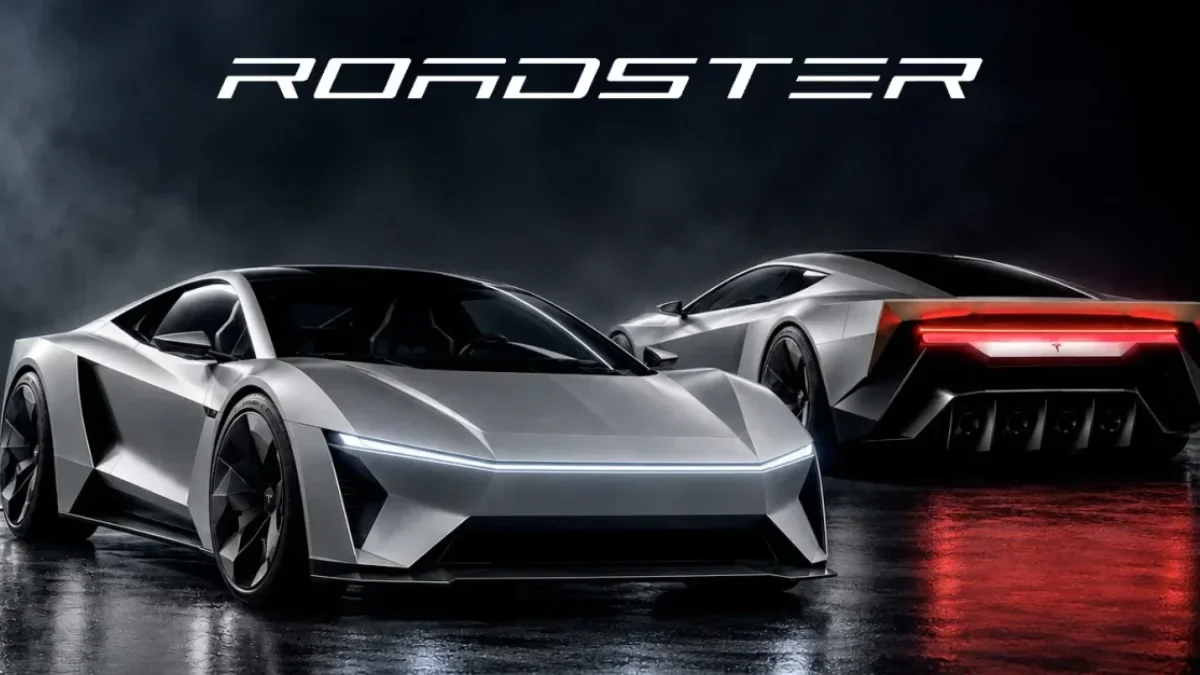
The new Tesla Roadster has finally been revealed in a redesigned form, bringing renewed attention to one of the most delayed electric sports cars in the industry. Unveiled on October 15, 2026, the next-generation model combines an aggressive supercar design with electric performance technology and an extraordinary demonstration featuring SpaceX-developed thrusters.
Tesla says production is planned for 2028, nearly a decade after the second-generation Roadster was first introduced as a concept in 2017. The latest model is expected to sit at the top of Tesla’s performance-car lineup, with multiple configurations aimed at different levels of performance and specialised technology.
The new Roadster’s headline claims include acceleration from 0 to 60 mph in under one second, a top speed exceeding 230 mph and more than 300 miles of driving range. These figures were presented during the unveiling and should be distinguished from independently verified production-car test results.
Tesla Roadster 2026: What’s New?
The redesigned Tesla Roadster 2026 features a sharper, more angular exterior than the concept shown in 2017. Its low profile, sculpted bodywork and performance-focused proportions give it the appearance of a futuristic electric supercar.
Tesla has also highlighted a new design direction inspired by high-speed aircraft, including the SR-71 reconnaissance aircraft and the F-35 fighter jet. The styling represents a departure from the earlier concept while retaining the Roadster’s emphasis on speed and aerodynamic performance.
The biggest talking point, however, is the proposed SpaceX technology. Tesla demonstrated a prototype performing unusual manoeuvres using a combination of suction-based systems and compressed-gas thrusters. The demonstration showcased the engineering ambition behind the project, although the final capabilities available to customers will depend on the production configuration and applicable safety regulations.
Tesla Roadster Performance and Top Speed
Performance remains the main attraction of the new electric sports car. During the unveiling, Tesla representatives presented acceleration and speed targets intended to place the Roadster among the fastest performance vehicles.
| Specification | Reported details |
|---|---|
| Vehicle type | Electric sports car |
| Seating | Two seats in Performance and Thrust versions; one seat in Rocket version |
| 0–60 mph acceleration | Under 1 second claimed |
| Top speed | More than 230 mph |
| Driving range | More than 300 miles claimed |
| Powertrain | Battery-electric |
| Special technology | SpaceX-developed compressed-gas thrusters on selected versions |
| Planned production | 2028 |
These figures are based on the October 2026 unveiling and Tesla’s reported claims. Final specifications, testing conditions and production certification may affect the figures delivered by customer vehicles.
Tesla Roadster SpaceX Thrusters: Can the Car Really Fly?
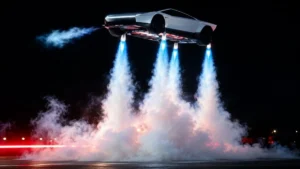
The most unusual feature of the new Tesla Roadster is its proposed SpaceX-inspired thruster system. During the demonstration, the vehicle performed dramatic manoeuvres, including an aerial turn and jumps over other vehicles.
Tesla and SpaceX engineers have reportedly worked together on a system using compressed gas to generate thrust. The concept is intended to take the Roadster beyond conventional electric-car performance, but it introduces engineering and safety challenges that ordinary sports cars do not face.
Tesla has described three configurations with different levels of capability. The Performance version is presented as road-ready, the Thrust version adds acceleration thrusters, and the Rocket version is described as a single-seat model with a more extensive flight-oriented system.
It is important to understand that a demonstration does not establish that all these capabilities will be approved for normal public-road use. The final production system, operating limits and regulatory status will be critical details to watch.
Tesla Roadster Variants: Performance, Thrust and Rocket
Tesla’s latest reservation information identifies three configurations for the next-generation Roadster.
Performance: This is the road-focused version, designed to deliver extreme electric-car performance with active aerodynamics and a two-seat layout.
Thrust: This configuration adds rear-mounted compressed-gas thrusters. Tesla has associated the system with acceleration below one second from 0 to 60 mph.
Rocket: The most specialised configuration is described as an invite-only, single-seat version with a more extensive thruster arrangement and flight-oriented capabilities.
The availability of each configuration, final equipment, delivery schedule and road-use certification remain important considerations. The Rocket version is particularly specialised and should not be assumed to function like an ordinary road-legal sports car.
Tesla Roadster Range and Battery Technology
Despite its focus on speed, the Roadster is also expected to offer practical driving range for a high-performance electric car. At the unveiling, Tesla presented a claimed range of more than 300 miles, equivalent to approximately 483 kilometres.
The final battery capacity, charging speed, energy consumption and real-world range have not been fully detailed. These figures will matter to buyers who want to use the vehicle beyond occasional track sessions or short recreational drives.
Battery performance under repeated high-speed acceleration will also be important. Managing heat while delivering extreme power is a major engineering challenge for any high-performance electric vehicle.
Tesla will need to provide further technical information before customers can properly evaluate charging convenience, highway range and battery performance in different conditions.
Tesla Roadster Interior and Technology
The redesigned Roadster is expected to maintain a driver-focused cockpit, but the complete production interior specification has not yet been confirmed.
The car’s configuration will vary by version, with the Performance and Thrust models described as two-seat vehicles and the Rocket model designed around a single seat. This distinction reflects the different intended uses of each configuration.
Other details, including the final dashboard design, infotainment system, display layout, driver-assistance functions and storage space, still require confirmation.
The emphasis appears to be on performance and specialised engineering rather than conventional luxury-car practicality. The final interior will determine how much comfort and everyday usability Tesla manages to retain.
Tesla Roadster Price and Reservation Details
Tesla has not announced a final retail price for the redesigned Roadster at the unveiling. However, its reservation page reportedly listed different deposits for the Performance and Thrust versions.
| Version | Reported reservation deposit |
|---|---|
| Performance | US$50,000 |
| Thrust | US$250,000 |
| Rocket | Invitation-only configuration |
These figures are reservation deposits, not the final vehicle prices. Tesla has not confirmed the complete retail price list for the new configurations. The Rocket version’s final price and availability also remain unclear.
The Roadster’s original 2017 announcement included a proposed starting price of US$200,000, but that historical figure should not be treated as the confirmed price of the redesigned model.
For Indian buyers, Tesla has not confirmed an India launch date or official local pricing. Import duties, taxes, shipping and compliance requirements could substantially affect the cost if the Roadster becomes available in India.
Tesla Roadster Production Date: Why the Wait Has Been So Long
The second-generation Roadster was first revealed in 2017, with deliveries originally expected much earlier. Tesla subsequently postponed the project several times while concentrating on other vehicles and company priorities.
The October 2026 unveiling is a major milestone, but it does not mean customer deliveries are beginning immediately. Tesla has now indicated a 2028 production target.
The remaining development work includes finalising the production vehicle, validating its performance systems and establishing how the different thruster configurations will operate within applicable regulations.
Given the Roadster’s history of delays, the planned production date should be treated as Tesla’s current target rather than a guaranteed delivery date.
Tesla Roadster Rivals in the Electric Supercar Market
The Roadster is aimed at the high-performance end of the automotive market. Depending on its final pricing and capabilities, it could be considered alongside premium electric performance vehicles and high-end sports cars from established luxury manufacturers.
Its claimed acceleration and top speed could make it an unusual competitor, particularly if Tesla can deliver the advertised figures in a production vehicle. However, buyers in this segment also consider braking performance, cornering ability, reliability, materials, build quality and after-sales support.
The specialised thruster technology may help the Roadster stand apart from conventional sports cars, but it will also raise questions about complexity, maintenance and practical usability.
Market Positioning: Tesla’s Most Ambitious Performance Car
The Tesla Roadster 2026 is positioned as a technology showcase rather than a mass-market electric vehicle. Its revised design, claimed sub-one-second acceleration and experimental SpaceX thruster system are intended to demonstrate how far Tesla wants to push electric performance.
The three proposed configurations could help the company serve different buyers, from those seeking a road-focused supercar to enthusiasts interested in specialised propulsion technology. The final commercial opportunity will depend on pricing, production capacity and how much of the demonstration technology reaches customer vehicles.
AutoXRoom Verdict: Extraordinary Claims, Production Still Ahead
The redesigned Tesla Roadster is one of the most unusual electric sports cars revealed in 2026. Its claimed performance figures, more than 300 miles of range and SpaceX-inspired thruster technology make it a fascinating project.
However, several crucial details remain unresolved, including final pricing, production specifications, real-world performance and the regulatory status of the most extreme thruster-equipped version. Production is currently planned for 2028, so the car is not yet an immediately available alternative to existing supercars.
For now, the Roadster represents Tesla’s boldest performance-car vision. Its real success will depend on whether the company can turn its dramatic demonstration into a safe, reliable and production-ready vehicle.