
Porsche has unveiled the Mission S, a striking new sports car concept that previews the German automaker’s future design direction and an upcoming flagship supercar. Revealed on October 15, 2026, the Mission S combines classic Porsche styling with modern engineering ideas and a driver-focused cabin.
The Porsche Mission S concept is part of the brand’s broader Sportwagenschmiede ’35 strategy. It previews a new mid-engined super sports car platform positioned above the iconic Porsche 911, with the future model intended to become a permanent addition to the company’s lineup rather than a limited-production hypercar.
While Porsche has not revealed the final production timeline, engine specifications or pricing, the concept provides an exciting look at the future of high-performance sports cars.
Porsche Mission S Design: Classic Inspiration Meets Modern Styling
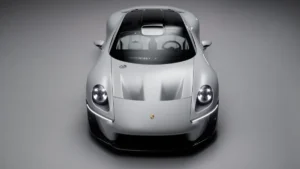
The new Porsche Mission S features a low front end, muscular bodywork and distinctive proportions that immediately connect it to the brand’s sports-car heritage. Its design incorporates familiar Porsche elements while introducing a cleaner and more futuristic appearance.
The raised front fenders, often described as torpedo-style fenders, give the concept a distinctive stance. The low nose draws inspiration from the Porsche 911 GT1, while the sloping roofline recalls the legendary Porsche 959.
At the rear, the Mission S features an integrated active rear wing, slim lighting elements and a prominent cooling fan above the engine compartment. These elements combine visual drama with the functional requirements of a mid-engined performance car.
The concept also features lightweight-looking dial-style wheels inspired by the classic Porsche 928. Together, these design details create a sports car that draws from the company’s history without simply repeating an older model.
Mid-Engine Architecture and Performance Focus
One of the most important aspects of the Porsche Mission S is its mid-engine layout. Positioning the engine centrally behind the cabin gives the car its characteristic proportions and supports the balanced handling expected from a high-performance sports car.
Porsche has confirmed that it is developing a new mid-engined super sports car platform based on the direction previewed by the concept. The architecture is intended to support a future model range above the 911.
However, the company has not yet published official engine displacement, power output, torque, acceleration or top-speed figures for a production version. Enthusiasts should therefore wait for further technical announcements before drawing conclusions about its performance.
| Specification | Current information |
|---|---|
| Model | Porsche Mission S |
| Vehicle type | Vision model / supercar concept |
| Engine layout | Mid-engined |
| Seating configuration | Two-seat concept |
| Powertrain details | Not fully announced |
| Power output | Not announced |
| Transmission | Not announced |
| Production timeline | Not confirmed |
| Expected positioning | Above the Porsche 911 |
The Mission S is currently a preview of Porsche’s future supercar direction, so the final production model could differ in important technical and design details.
Porsche Mission S Interior: A Return to Driver-Focused Controls
The cabin of the Porsche Mission S concept takes a different approach from the increasingly screen-heavy interiors found in many modern cars. Porsche has focused on clear information, physical controls and a stronger connection between the driver and the vehicle.
Five round instruments sit behind the steering wheel, with an analogue-style rev counter at the centre. The surrounding displays are designed to adapt to the selected driving mode, keeping key information close to the driver’s line of sight.
The dashboard combines traditional switches and buttons with digital displays. Porsche has also introduced distinctive push-pull controls and a specially designed key holder, reinforcing the concept’s emphasis on tactile interaction.
Another notable detail is the absence of a permanently integrated central infotainment screen. Instead, the concept uses a retractable smartphone holder, allowing a personal device to serve as a navigation or information display when required.
This approach reflects Porsche’s aim of keeping the driving experience at the centre of the cabin design.

Porsche Mission S Features and Design Highlights
The concept showcases several features intended to combine performance, functionality and visual appeal.
- Active rear wing: Designed to integrate aerodynamic functionality into the rear profile.
- Rear cooling fan: A prominent design element inspired by the Porsche 917 racing car.
- Five round instruments: A driver-focused display arrangement with an analogue-style rev counter.
- Retractable smartphone holder: An alternative to a permanently installed central display.
- Dial-style wheels: A modern interpretation of the classic Porsche 928 wheel design.
- Driver-oriented controls: Physical buttons and digital displays arranged around the driving position.
These details are part of the vision model. Porsche has not confirmed that every feature will appear unchanged on the production vehicle.
Porsche Mission S Engine and Powertrain Expectations
Porsche has not yet announced the final powertrain specifications for the Mission S production model. The concept previews a mid-engined platform, but details such as engine configuration, hybrid assistance, power output and transmission remain unconfirmed.
The platform is intended to provide flexibility for a future super sports car offering. Reports have discussed possible combustion-engine configurations, but these should not be treated as confirmed specifications.
For now, the most reliable takeaway is that Porsche is developing a new flagship sports-car architecture designed to sit above the 911. More information about the engine and performance capabilities is expected as development progresses.
Porsche Mission S Price and Launch Timeline
Porsche has not announced an official price or production launch date for the Mission S. The concept is intended to preview a future model rather than serve as a complete production specification reveal.
Because the planned vehicle will sit above the Porsche 911, it is expected to occupy a premium position in the sports-car market. Its final price will depend on the production specification, powertrain, materials and equipment.
The Mission S is also different from a limited-run concept or one-off hypercar. Porsche has described the planned super sports car as a permanent addition to its customer offering, suggesting that the company sees a longer-term role for the platform.
Customers should wait for an official production announcement before relying on estimated launch dates or prices.
Porsche Mission S Rivals: Which Supercars Could It Challenge?
Once it reaches production, the Mission S-based sports car could compete with high-performance models from brands such as Ferrari, Lamborghini and McLaren. Its exact rivals will depend on the final engine, power output, price and intended driving character.
Porsche will need to balance outright performance with handling precision, driver engagement and everyday usability. The 911 has built its reputation around that combination, and the new flagship will need to offer a meaningful step forward while retaining the brand’s distinctive character.
The Mission S concept suggests that Porsche wants its future top-tier sports car to be recognisably connected to its heritage while offering a more exclusive and technically ambitious experience.
Market Positioning: A New Flagship Above the 911
The Porsche Mission S represents a significant step in the company’s plans to expand its sports-car portfolio. Rather than replacing the 911, the future model is intended to sit above it and give Porsche a dedicated flagship supercar platform.
Its retro-inspired design, mid-engine architecture and driver-focused interior indicate that Porsche is placing strong emphasis on traditional sports-car values. The new platform could also provide the foundation for different future versions, although Porsche has not yet detailed the planned range.
The concept’s ultimate success will depend on how effectively the production model combines performance, technology and exclusivity.
AutoXRoom Verdict: Porsche’s Sports-Car Future Looks Exciting
The Porsche Mission S concept offers an appealing glimpse of a future supercar that prioritises driving engagement, distinctive design and a connection to the brand’s motorsport heritage. Its mid-engine layout and position above the 911 make it one of Porsche’s most interesting upcoming projects.
The restrained cabin design is particularly notable in an era when many manufacturers are adding larger screens and more digital controls. Porsche’s alternative approach could appeal to enthusiasts who value physical controls and a driver-focused cockpit.
For now, the Mission S remains a vision model rather than a fully specified production car. Its engine, performance figures, final price and launch timeline remain to be announced, but the concept establishes a clear direction for Porsche’s next generation of flagship sports cars.