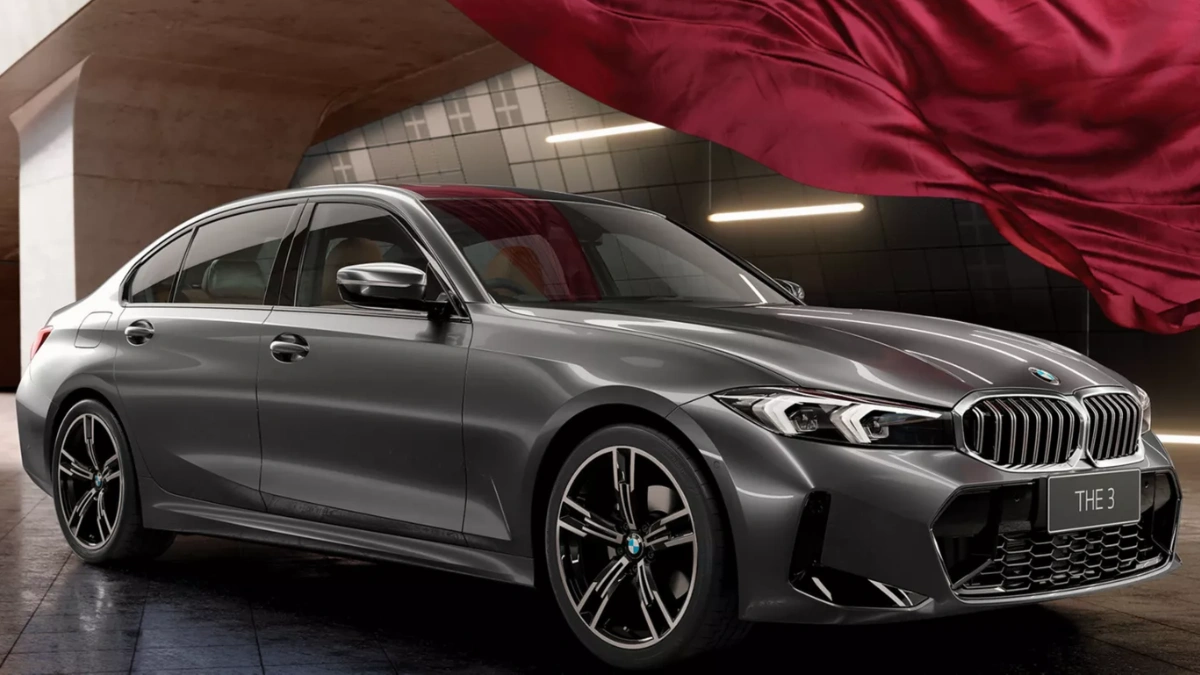
BMW is preparing the next generation of its iconic 3 Series, and the upcoming internal-combustion version is set to keep petrol power firmly at the centre of the lineup. Codenamed G50, the new-generation BMW 3 Series will continue to offer both four-cylinder and six-cylinder petrol engines.
The move is significant as BMW follows a technology-open strategy, allowing the combustion-powered 3 Series to continue alongside the fully electric BMW i3. The new model is expected to enter global markets between late 2026 and 2027, with production scheduled to begin in the second half of 2026.
For Indian buyers, the BMW 3 Series 2026 Price In India will be one of the key details to watch once BMW confirms its local plans.
Four-Cylinder Petrol Engines Continue
The next-generation 3 Series will continue to offer four-cylinder petrol engines, with updated powertrains expected to form the core of the range.
BMW is also adding 48-volt mild-hybrid technology across its combustion-engine lineup. This system is designed to improve efficiency while supporting smoother power delivery and performance.
The combination of turbocharged petrol engines and mild-hybrid assistance should allow BMW to maintain the driving character expected from the 3 Series while meeting increasingly strict efficiency requirements.
Inline-Six Returns With the M350 xDrive
One of the biggest highlights of the new generation is the continuation of BMW’s 3.0-litre straight-six petrol engine. The current M340i will make way for the new M350 xDrive, which becomes the only non-M variant in the upcoming lineup to retain the six-cylinder configuration.
The M350 xDrive produces 443 hp and 580 Nm, with power sent through an eight-speed Steptronic automatic transmission and BMW’s xDrive all-wheel-drive system.
BMW claims a 0–100 km/h acceleration time of just 4.1 seconds, while the electronically limited top speed stands at 250 km/h.
New BMW 3 Series Gets a Drift Mode
The performance focus of the M350 xDrive goes beyond its engine output. BMW is introducing a factory-developed Drift Moment function that can turn the all-wheel-drive sedan into a rear-wheel-drive machine for controlled oversteer.
The system can be activated through the central touchscreen and is designed to disconnect the front axle while switching off stability-control intervention.
This gives the M350 xDrive a much more playful character than a conventional luxury sports sedan and could become one of the most talked-about features of the new 3 Series.
What About the BMW 3 Series Price in India?
The current-generation 3 Series is already positioned as one of BMW India’s important entry points into the luxury sedan segment. Consequently, the BMW 3 Series Price In India for the new generation will be closely watched.
The final Indian price will depend on which powertrains and variants BMW decides to introduce locally. The M350 xDrive, if launched in India, would sit considerably higher than the regular four-cylinder versions because of its performance-focused powertrain and equipment.
BMW could also continue offering locally relevant variants designed specifically for the Indian market.
BMW 320d and the Future of Diesel
The BMW 320d Price In India remains a popular search term because diesel-powered 3 Series models have historically been important in the Indian market.
However, the next-generation G50 is expected to move away from diesel engines in major markets. BMW is instead focusing on petrol, mild-hybrid and plug-in-hybrid powertrains, while its electric strategy is represented separately by the Neue Klasse-based BMW i3.
This means buyers looking specifically for a new diesel-powered 3 Series may have fewer options when the G50 reaches global markets.
Could the 3 Series LWB Continue in India?
BMW has previously offered a long-wheelbase version of the 3 Series in India, giving rear-seat passengers additional space.
The BMW 3 Series Lwb Price In India will therefore remain an important search topic if BMW confirms another long-wheelbase version for the Indian market. A longer wheelbase could continue to make the sedan particularly attractive to buyers who prioritise rear-seat comfort.
The BMW 3 Series Lwb On Road Price would naturally depend on the final variant, taxation, insurance and registration costs in the buyer’s state.
What About the 330Li and Gran Limousine?
The current Indian market has also used the 330Li designation for the long-wheelbase 3 Series. As a result, the BMW 330Li Price In India remains relevant for buyers researching the existing model and its potential successor.
The BMW 3 Series Gran Limousine has carved out a distinct position in India by combining the sporty image of the 3 Series with additional rear-seat space. Whether BMW retains the same naming strategy for the G50 in India remains to be seen.
A new long-wheelbase model could be especially important for India because rear-seat-focused luxury sedans continue to attract buyers who want chauffeur-friendly comfort without moving up to a larger 5 or 7 Series.
BMW 3 Series Design and Technology
The new combustion-powered 3 Series will use a heavily revised version of BMW’s CLAR architecture. Unlike the electric i3, the ICE model will retain more traditional proportions, including a longer bonnet and conventional sedan silhouette.
BMW is also expected to bring its latest-generation interior technology to the model, including the new Panoramic iDrive interface.
The cabin is likely to combine digital displays, connected technology and BMW’s driver-focused layout while retaining the premium character associated with the 3 Series.
Will a Black 3 Series Still Be Popular?
Exterior colour searches have always played a role in luxury-car buying, and the BMW 3 Series Black Price In India is another popular search phrase among prospective buyers.
While black is expected to remain one of the most desirable colour choices, the actual price difference will depend on BMW’s final Indian colour and variant strategy. Buyers will also have to consider whether individual paint options carry an additional charge.
Production and Global Launch Timeline
BMW has confirmed that production of the next-generation combustion-powered 3 Series is scheduled to begin during the second half of 2026.
Global launches are expected to follow between late 2026 and 2027. The ICE 3 Series will be sold alongside the electric i3, giving customers a choice between traditional petrol-powered performance and fully electric mobility.
The strategy allows BMW to keep the 3 Series nameplate relevant across different markets while responding to varying levels of EV adoption.
Market Positioning
The G50-generation BMW 3 Series is shaping up to be a major evolution rather than a complete departure from the formula that made the nameplate successful.
Four-cylinder petrol engines will serve as the mainstream option, while the M350 xDrive brings the headline-grabbing 3.0-litre inline-six. The addition of 48-volt mild-hybrid technology across the combustion range also shows how BMW is adapting its ICE models for the next stage of efficiency.
For India, the availability of long-wheelbase variants could be just as important as the engine lineup, particularly given the success of the BMW 3 Series Gran Limousine.
AutoXRoom Verdict
The next-generation BMW 3 Series is proving that the internal-combustion engine still has a place in BMW’s future. By retaining four-cylinder and six-cylinder petrol engines while adding 48V mild-hybrid technology, BMW is offering an alternative to buyers who are not ready to switch completely to electric cars.
The M350 xDrive is the standout model, combining 443 hp, xDrive all-wheel drive and a unique drift function. For India, pricing, variant availability and the continuation of long-wheelbase versions will ultimately determine how competitive the new 3 Series becomes.
If BMW gets the Indian variant mix right, the G50 could continue the 3 Series’ position as one of the most desirable entry-level luxury performance sedans.