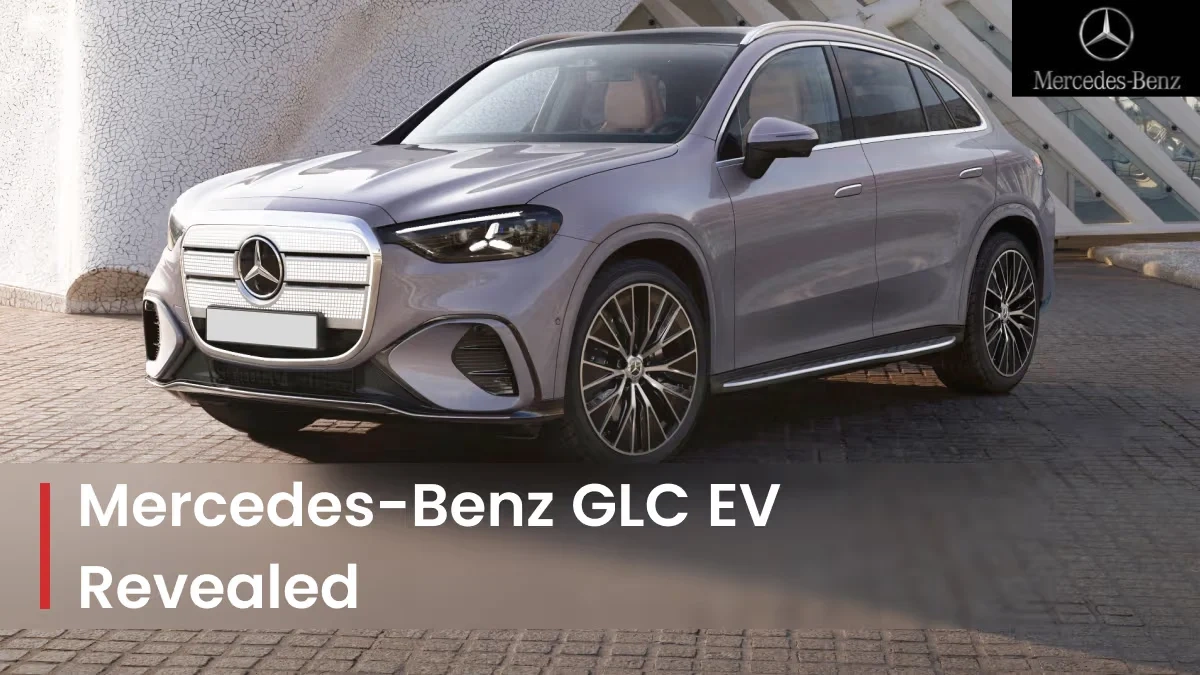
Mercedes-Benz is taking a major step forward with its electric SUV lineup with the new GLC 400 4MATIC. Built on a dedicated electric architecture, the model replaces the outgoing EQC and combines strong performance with long-distance usability and extremely fast charging.
Based on international first-drive impressions, the new GLC Electric focuses less on aggressive acceleration and more on delivering effortless performance, quiet cruising and premium comfort. The result is an EV that aims to bring the familiar Mercedes-Benz luxury experience into a new electric era.
Mercedes-Benz GLC 400 Electric Review: Performance
The Mercedes-benz Glc 400 Electric Review starts with an impressive dual-motor powertrain. The all-wheel-drive system produces between 453 bhp and 489 bhp depending on specification, while maximum torque reaches 800 Nm.
Despite the substantial output, Mercedes-Benz has tuned the GLC 400 4MATIC to deliver its performance smoothly rather than through an abrupt, neck-snapping launch. It can accelerate from 0 to 100 km/h in around 4.3 seconds, while the top speed is electronically limited to 210 km/h.
The SUV weighs close to 2.7 tonnes, but its battery is mounted low in the floor. This gives the GLC a planted feel through corners, although the steering has been described by reviewers as more comfort-oriented than communicative.
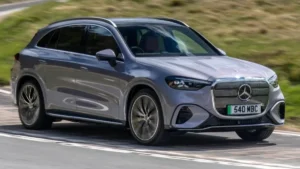
Two-Speed Rear Motor Adds Efficiency
One of the technically interesting elements of the new electric GLC is its two-speed reduction-gear transmission on the rear motor.
The system is designed to improve efficiency during higher-speed cruising. A front Disconnect Unit can also uncouple the front motor during low-load conditions, allowing the SUV to reduce unnecessary energy consumption when all-wheel drive is not required.
These systems show how Mercedes-Benz is trying to improve not just peak performance but also real-world efficiency.
715km WLTP Range and 800V Charging
Range and charging are among the strongest aspects of the new electric GLC. The SUV uses a 94kWh usable lithium-ion battery and has a claimed WLTP range of up to 715km, depending on wheel and specification choices.
The vehicle’s 800-volt electrical architecture allows DC charging at rates of up to 330kW. Mercedes-Benz claims that a 10–80 percent charge can take approximately 22 minutes under suitable charging conditions.
A 10-minute charging session can add up to around 305km of claimed range, making the GLC particularly interesting for long-distance EV use.
An 11kW AC onboard charger is standard, while a 22kW AC charging option is also available in some markets.
Mercedes GLC Electric 2027 Review: What Stands Out?
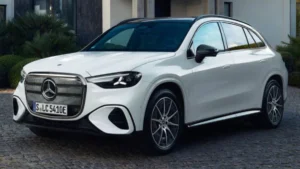
The Mercedes Glc Electric 2027 Review picture emerging from international drives is that Mercedes-Benz has prioritised refinement rather than simply chasing acceleration figures.
The low-mounted battery contributes to stability, while the available air suspension and rear-wheel steering help the large electric SUV remain composed. This combination should also make the GLC more comfortable on uneven roads than many performance-focused electric SUVs.
For Mercedes-Benz, this is an important distinction because the electric GLC is expected to serve customers who want luxury first and outright sportiness second.
A More Premium Electric GLC Interior
The 2027 Mercedes-benz Glc Ev Interior represents another major change. Instead of relying heavily on glossy surfaces, Mercedes-Benz has introduced more premium-looking materials, including leather and open-pore wood.
The dedicated EV architecture also provides a longer wheelbase compared with the combustion-powered GLC. This translates into approximately 50mm of additional rear legroom.
There is also a 570-litre luggage compartment, giving the electric GLC useful practicality for family travel.
Mercedes-Benz GLC EQ 2027 Brings a New EV Identity
The Mercedes-benz Glc EQ 2027 name has been associated with Mercedes-Benz’s next-generation electric GLC strategy. The new model represents a significant departure from the older EQC approach, using a dedicated EV platform rather than adapting an existing combustion-engine architecture.
This allows Mercedes-Benz to optimise packaging, wheelbase, battery placement and cabin space specifically for electric mobility.
The result is an SUV that retains the recognisable GLC identity while introducing a substantially different technical foundation underneath.
S-Class-Inspired Ride Comfort
One of the most interesting elements of the GLC Electric is its available air suspension. The setup is derived from Mercedes-Benz’s higher-end luxury technology and can be paired with rear-wheel steering capable of turning the rear wheels by up to 4.5 degrees.
This combination helps improve both manoeuvrability at lower speeds and stability at higher speeds.
The suspension’s ability to absorb uneven surfaces is particularly important for a luxury EV. Rather than making the GLC feel like a heavy performance machine, Mercedes-Benz has focused on keeping the cabin isolated from road imperfections.
BMW iX3 vs GLC 400: Different Approaches to Luxury EVs
The BMW Ix3 Vs Glc 400 comparison is likely to become an interesting one as both German manufacturers expand their next-generation electric SUV offerings.
The Mercedes-Benz approach places a strong emphasis on comfort, quietness, air suspension and long-distance cruising. BMW’s iX3, meanwhile, is expected to emphasise its own interpretation of driving dynamics and Neue Klasse technology.
The final comparison will depend on market-specific specifications and pricing, but the two models represent different approaches to the premium electric SUV segment.
Advanced Technology Inside the Cabin
The electric GLC features a large dashboard display with updated software, integrated navigation and over-the-air update capabilities.
Google Maps-powered navigation is another notable feature, while Mercedes-Benz retains physical controls in selected areas to keep frequently used functions accessible.
The vehicle also features the latest MB.Drive driver-assistance technology, supported by NVIDIA computing hardware. Mercedes-Benz is developing the system toward supervised point-to-point automated driving capabilities, subject to market regulations and approvals.
How Does It Compare With the C-Class EV?
The Mercedes C-class Electric Review will also be relevant for buyers comparing Mercedes-Benz’s upcoming electric models. While the C-Class Electric is expected to target a lower segment, the GLC Electric offers the additional practicality and elevated driving position associated with an SUV.
The GLC therefore sits between Mercedes-Benz’s electric sedan strategy and its larger luxury EV offerings, giving buyers another option within the brand’s expanding electric portfolio.
Expected 2027 GLC Electric Price
The 2027 Glc Electric Price has not been established in the supplied first-drive information for every market, and Indian pricing will depend on Mercedes-Benz India’s launch strategy, taxes, variant selection and equipment.
The dedicated electric platform and advanced 800V charging system are likely to place the GLC Electric firmly in the premium luxury EV category.
For Indian buyers, the final price will be one of the most important pieces of information once the company announces its local launch plans.
Market Positioning
The new electric GLC is positioned as a luxury SUV that combines strong performance with long-distance usability rather than focusing exclusively on outright acceleration.
Its 94kWh usable battery, claimed 715km WLTP range and 330kW DC charging capability give it an impressive technical foundation. The available air suspension, rear-wheel steering and spacious cabin further strengthen its luxury credentials.
The model also marks a major transition from the EQC, moving Mercedes-Benz toward a dedicated electric architecture designed around the requirements of modern EVs.
AutoXRoom Verdict
The new Mercedes-Benz GLC 400 4MATIC looks like a significant step forward for Mercedes-Benz’s electric SUV strategy. Its combination of 453–489 bhp, 800 Nm, a 94kWh battery and 800V charging technology gives it a strong technical package.
More importantly, the GLC does not sacrifice Mercedes-Benz’s traditional focus on comfort. The available air suspension, rear-wheel steering, quiet cabin and premium materials make it feel designed for effortless long-distance travel.
With production and market launches moving into the next phase of Mercedes-Benz’s electric strategy, the final Indian specifications and 2027 Glc Electric Price will be key details to watch.