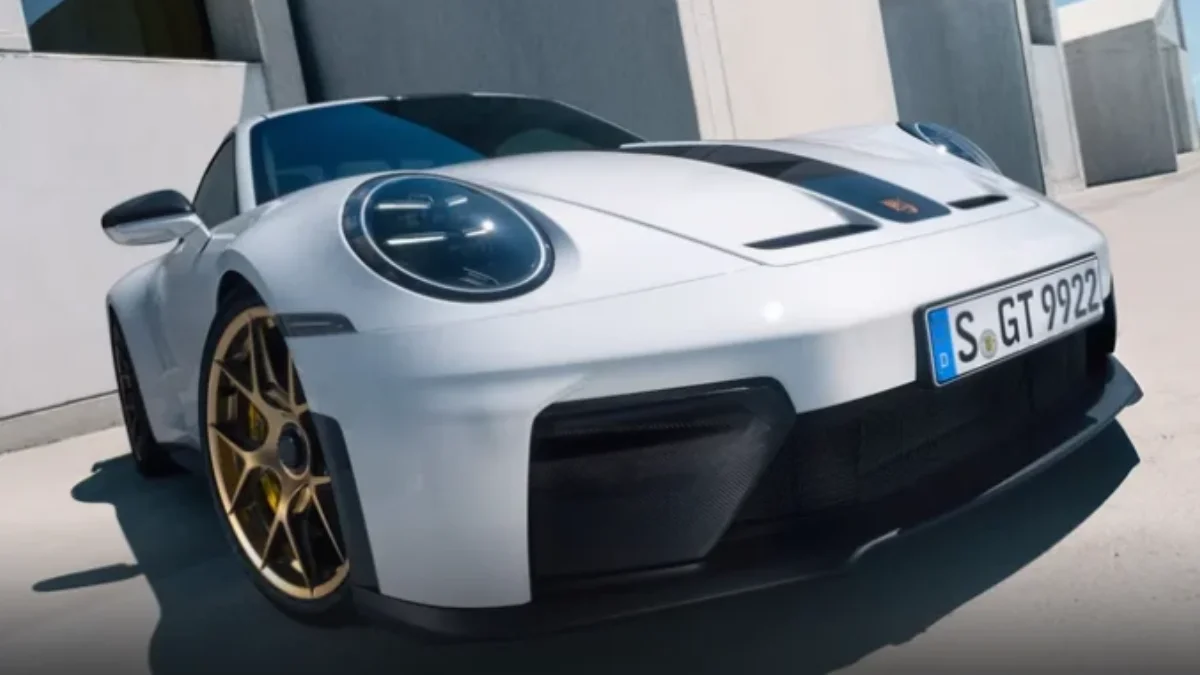
The Porsche 911 has remained one of the world’s most recognisable sports cars for decades. Its long-running evolution has produced everything from lightweight homologation specials and motorsport-focused machines to rare collector editions that have become highly desirable among enthusiasts.
Across multiple generations, Porsche has repeatedly experimented with weight reduction, aerodynamics, four-wheel drive, turbocharging and naturally aspirated engines. These experiments have created some of the most memorable versions of the 911, many of which are now considered important pieces of Porsche history.
The Early 911 Experiments
Before the production 911 fully established its identity, Porsche explored several prototypes and development cars. The 1960 Typ 695 was one such early project, experimenting with a longer wheelbase and a more practical rear-seat layout.
The 1972 915 was another unusual long-wheelbase GT study created to explore the performance potential of the 911 platform. These early projects demonstrate how Porsche continued to develop the formula rather than simply repeating the same design.
For enthusiasts researching the Best Porsche 911 Generation, these early development cars provide important context for understanding how the iconic shape and engineering philosophy evolved.

1973 Carrera RS 2.7 Changed the 911 Formula
The 1973 Carrera RS 2.7 is one of the most celebrated versions in the history of the Porsche 911. Developed as a lightweight homologation special, it combined a more powerful flat-six engine with extensive weight-saving measures.
Its instantly recognisable ducktail rear spoiler became one of the defining visual features of the model. The Carrera RS 2.7 also demonstrated how Porsche could transform the 911 into a focused performance machine without losing its road-going character.
For collectors considering the Best Porsche 911 Years To Buy, the early 1970s remain particularly significant because of the lasting influence of the Carrera RS 2.7.
Porsche 959 Took Technology to Another Level
The Porsche 959 represented a completely different approach to performance. Introduced in the 1980s, it combined all-wheel drive with twin-turbocharging and advanced technology that was far ahead of its time.
The 959 also demonstrated its capabilities in demanding motorsport environments, including the Dakar Rally. Its engineering would influence Porsche’s approach to all-wheel-drive performance cars for years to come.
The technology developed around the 959 also found connections with later special 911 models, making it an important part of Porsche’s high-performance history.

Carrera 4 Leichtbau: One of the Rarest 964s
The 1992 Carrera 4 Leichtbau was an exceptionally rare 964-based special. It used technology associated with the 959 programme and was heavily focused on reducing weight.
With fewer than 25 examples produced, it occupies an extremely unusual position among Porsche’s rare road cars. Its limited production and engineering specification make it particularly interesting to collectors studying Porsche’s most exclusive 911 derivatives.
911 Sport Classic Brought Back the Retro Formula
The 2010 911 Sport Classic was based on the 997 generation and limited to just 250 examples. It featured a distinctive double-bubble roof, a ducktail spoiler and retro-inspired grey paintwork.
Rather than chasing outright performance alone, Porsche used the Sport Classic to celebrate the visual heritage of earlier 911s. It showed how historical design elements could be combined with modern engineering to create a limited collector-focused model.
For someone researching the Best Porsche 911 To Buy Second Hand, special editions such as the Sport Classic sit in a very different category from regular production cars because rarity and provenance can be just as important as mechanical condition.
The 911 R Returned to Analog Performance
The 2016 Porsche 911 R became famous for taking a deliberately old-school approach to performance. It combined a naturally aspirated flat-six engine with a manual gearbox and lightweight construction.
At a time when turbocharging and increasingly complex performance technology were becoming common, the 911 R focused on direct driver involvement.
Its philosophy is particularly relevant to enthusiasts searching for the Best Porsche 911 For Daily Driving, although its rarity and collector status make it very different from a conventional everyday 911.
Porsche 911 GT3 Continues the Motorsport Spirit
The Porsche 911 Gt3 represents one of the most important performance branches of the modern 911 family. GT3 models have traditionally focused on naturally aspirated performance, sharp handling and strong connections to Porsche’s motorsport engineering.
The GT3 formula has evolved significantly across generations, but its core purpose has remained similar: delivering a highly focused driver’s car that can still be used on public roads.
This makes the GT3 one of the most recognisable modern performance versions of the 911.
Porsche 911 GT3 RS Pushes the Formula Further
The Porsche 911 Gt3 Rs takes the track-focused philosophy even further. Compared with a standard GT3, RS models place greater emphasis on aerodynamics, weight reduction and circuit performance.
Large aerodynamic elements and an aggressive chassis setup distinguish the GT3 RS from more road-oriented versions of the 911. It is designed for enthusiasts who prioritise maximum performance rather than everyday comfort.
The GT3 RS also illustrates how Porsche continues to use the 911 platform as a test bed for increasingly sophisticated performance technology.
Most Popular Porsche 911 Model and Everyday Appeal
The Most Popular Porsche 911 Model can vary depending on the generation, market and buyer preferences. The standard Carrera versions have traditionally offered a more balanced combination of performance, comfort and usability, while models such as the GT3 and GT3 RS target a much more specialised audience.
This broad range is one of the reasons the 911 has remained relevant for so long. A buyer can choose a relatively comfortable everyday sports car or move toward a highly focused track-oriented derivative while staying within the same iconic family.
Porsche 911 Price and Collector Value
The Porsche 911 Price varies enormously depending on generation, specification, mileage, condition and rarity. A regular production Carrera and a limited-production model such as the 911 R or Sport Classic occupy completely different segments of the market.
Rare historical examples can command significant collector interest, while more common used 911s provide a more accessible entry into the model’s ownership experience.
For second-hand buyers, service history, mechanical condition, originality and previous ownership can be particularly important when evaluating an older 911.
Which 911 Stands Out Across the Generations?
There is no single formula behind the 911’s success. The Carrera RS 2.7 established the lightweight homologation special, the 959 pushed technological boundaries, the Carrera 4 Leichtbau demonstrated extreme rarity, and the 911 R revived the appeal of an analog driving experience.
Meanwhile, modern GT3 and GT3 RS models continue to push the performance side of the 911 further.
The result is a model family with an unusually broad range of personalities, from comfortable road cars to highly focused collector and track machines.
Market Positioning
The Porsche 911 occupies a unique position in the sports-car market because its identity has remained consistent while its technology and performance have evolved dramatically.
Its history includes lightweight legends, motorsport-inspired specials, rare collector editions and modern high-performance variants. This combination has helped make the 911 one of the longest-running and most recognisable performance-car nameplates.
AutoXRoom Verdict
The rarest Porsche 911s show how far Porsche has been willing to develop the same basic sports-car formula. From the Carrera RS 2.7 and 959 to the 911 R, GT3 and GT3 RS, each generation has introduced a different interpretation of performance.
For buyers and collectors, the appeal of the 911 ultimately depends on what they value most: historical significance, everyday usability, rarity, analogue driving character or outright track performance. That variety is what makes the Porsche 911’s history particularly distinctive.